If you're figuring out how to use ash of war Elden Ring, this is one system you really do not want to ignore. Ashes of War can change your weapon skill, shift your damage type, and in a lot of cases completely reshape how your stats scale with that weapon. A lot of players miss that early, keep swinging a default weapon into tougher fights, and then wonder why their damage suddenly feels underwhelming. This guide walks through the whole thing, from unlocking the menu to choosing between options like Unsheathe, Hoarfrost Stomp, and Bloody Slash.

Ashes of War Basics
An Ash of War usually does two jobs at once. First, it replaces your weapon's default skill with a new active ability. Second, it often unlocks an affinity that changes the weapon's scaling, whether that's Heavy, Keen, Quality, or an elemental option like Magic, Sacred, Fire, or Cold.
That second part matters more than many players expect. Some Ashes are mostly about the skill itself, but others are just as valuable because of the affinity they open up. A few are only skill swaps and do not change scaling at all, so it is always worth checking the affinity options before you confirm.
The big restriction is weapon type. Most regular weapons upgraded with standard Smithing Stones can take compatible Ashes of War. Unique weapons upgraded with Somber Smithing Stones usually cannot be changed at all, because their skills are locked in place. Bloodhound's Fang and Moonveil are classic examples. If the equipment screen shows a fixed skill and gives you no way to swap it, that weapon is in the somber category.
This is why a plain Longsword is often more flexible than a flashy boss weapon. It may not look as exciting on paper, but it can take a wide range of Ashes and affinities, which gives you way more room to tune it around your build.
A simple example is Unsheathe on a katana. You keep the katana's fast moveset, but your opener changes completely. Instead of relying on a basic approach attack, you get a draw strike that can punish bosses harder and deal serious stance damage. That is the kind of change that affects how you actually play, not just what number shows up in the menu.
Also, not every Ash of War is there to increase raw damage. Some are picked for mobility, like Bloodhound's Step. Others are useful because they build status quickly or hit poise hard enough to create stagger windows. If you treat every new Ash as a straight damage upgrade, you are going to make some bad swaps early on.
How to Use Ash of War Elden Ring
Once you have the required item, the actual process is simple. Rest at a Site of Grace, open the menu, and choose "Ashes of War." From there, pick a compatible weapon, select the Ash you want, then confirm the skill and affinity combination.
Before you lock it in, check the preview numbers. Seriously. The game shows you what your damage is about to become, and that quick glance can save you from turning a solid setup into a weaker one.
The item that unlocks this menu is the Whetstone Knife, and you can find it in a chest at Gatefront Ruins in Limgrave. If you skipped that area and rushed ahead, the missing menu is probably not a bug. You just do not have the knife yet. Once you grab it, you unlock the basic Ashes of War system along with the starting affinity options.
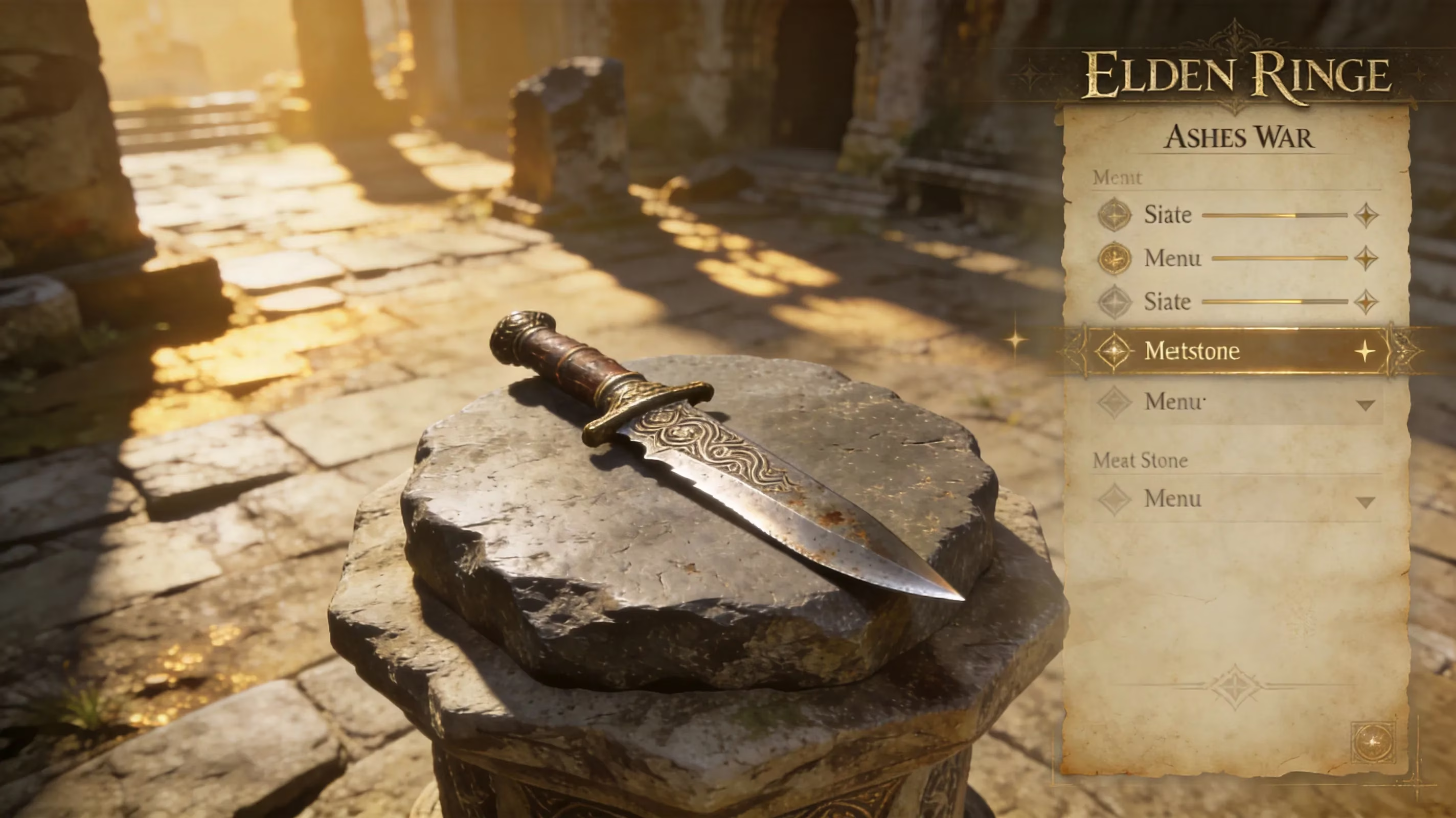
When you are choosing an Ash, keep this checklist in mind:
-
Weapon compatibility: Not every Ash fits every weapon class
-
Your main stats: Strength, Dexterity, Faith, Intelligence, and so on
-
FP cost: A strong skill is less useful if you can barely cast it
-
Your goal: More raw damage, better utility, more poise damage, or status setup
A basic Longsword example makes this easy to see. On a level 20 character leaning into Strength, Heavy usually gives better returns. If Dexterity is your higher stat, Keen tends to perform better instead. If your stats are more evenly split, Quality can make sense, though it usually shines more once both Strength and Dexterity are developed enough to justify it.
| Setup | Weapon | Affinity | Dominant Stat | Approximate AR Direction |
|---|---|---|---|---|
| Strength-leaning (Str 25, Dex 14) | Longsword +4 | Heavy | Strength | Higher physical AR |
| Dexterity-leaning (Str 14, Dex 25) | Longsword +4 | Keen | Dexterity | Higher physical AR |
| Balanced (Str 20, Dex 20) | Longsword +4 | Quality | Both | Moderate balanced AR |
The most common mistake here is blind overwriting. If you swap to an affinity because the name sounds better, but it lowers the scaling your build actually uses, your damage drops. Sacred on a character with only 12 Faith is a good example. It can look appealing, but the preview will usually tell you the truth right away.
Weapon Affinities and Scaling
Affinities change more than one number. They can alter a weapon's base damage, its scaling letters, and sometimes add elemental damage or status buildup on top. That is why they matter so much.
For physical builds, the basic comparison is straightforward:
-
Heavy: Better Strength scaling
-
Keen: Better Dexterity scaling
-
Quality: More balanced scaling for mixed Strength/Dexterity builds
If your build is mostly Strength, Heavy is usually the cleanest fit. If you are stacking Dexterity, Keen makes more sense. Quality sits in the middle, but it is not automatically better just because it scales with two stats. If those stats are not both high enough, it can underperform compared to a focused Heavy or Keen setup.
Elemental affinities work differently. Sacred, for example, adds Holy damage and shifts scaling toward Faith. On a level 40 Faith build, changing a basic straight sword from Standard to Sacred can absolutely raise your total attack power. On a low-Faith melee build, that same change often feels bad immediately because you lose too much physical efficiency and do not get enough back from the new scaling.
That is the real point: the same affinity can be excellent on one build and terrible on another.
Here is the practical scenario. A level 40 character who has pushed Faith hard may get more out of Sacred on a basic sword than Standard, because the Faith scaling starts carrying real weight. A low-Faith melee build making the same swap will usually lose damage in actual combat, even if the menu makes the affinity look tempting.
Enemy resistance also matters, and this is where players get tripped up. Holy scaling can look great on the stat screen, but some late-game enemies resist Holy damage heavily. Radagon and the Elden Beast are the obvious examples. So even if Sacred looks strong in the menu, it may still underperform in the fight that actually matters. Keeping a physical backup or a second weapon with a different damage type is often the smarter play.
Best Times to Change Ashes
There are a few moments when swapping Ashes of War is genuinely worth the effort. Right before a boss is one of them, especially if the fight punishes slow skills or rewards fast stagger pressure. After a respec with Rennala is another big one, because your old affinity may no longer match your new stats. It also makes sense when you move from early Limgrave into tougher midgame areas like Liurnia or Altus Plateau, or when you are trying out a weapon class you have not used before.
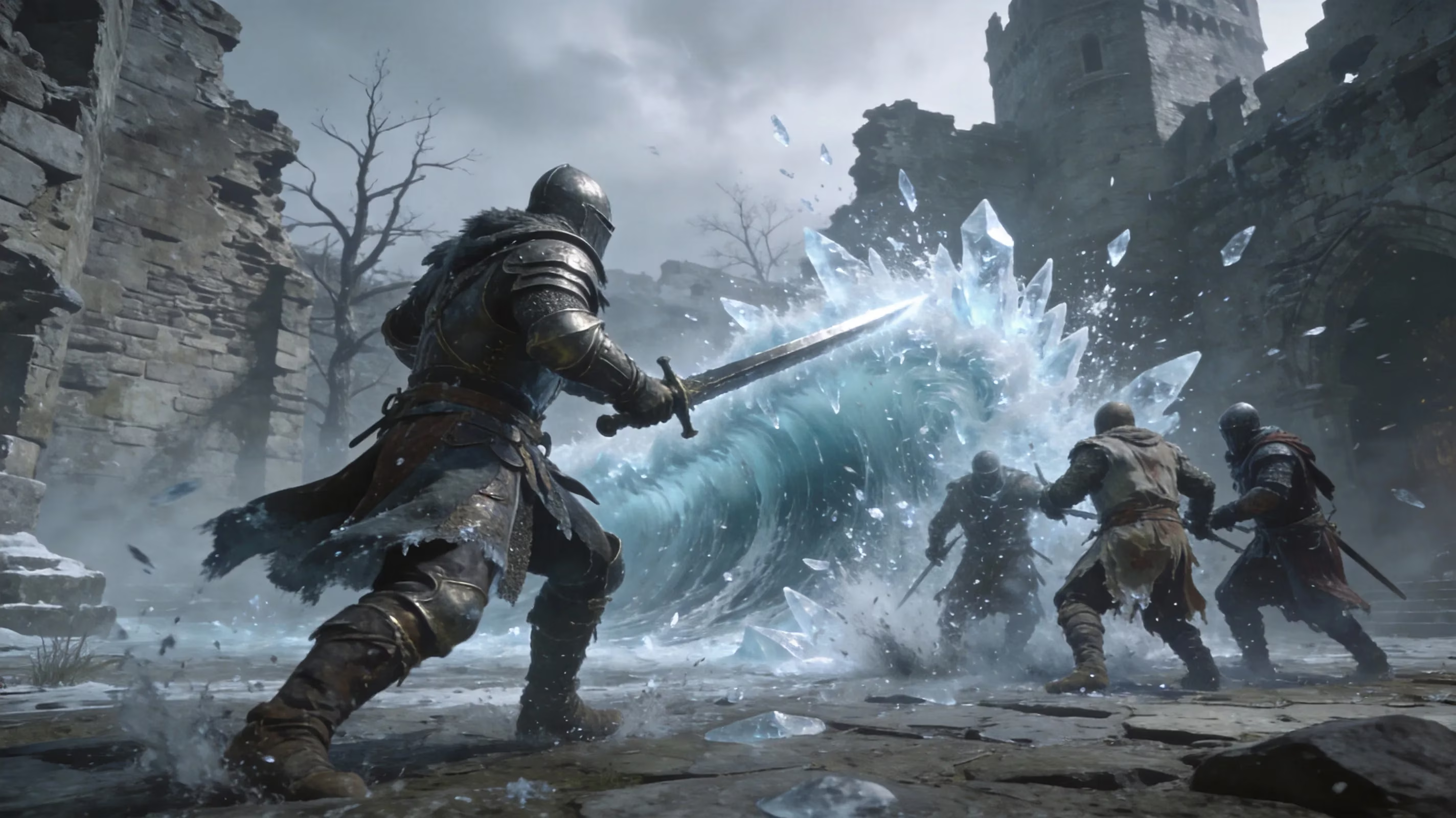
Open-world clearing and boss fights do not ask for the same things. A wide-area skill like Hoarfrost Stomp is great when you are dealing with groups in caves, ruins, or packed overworld camps. In a duel against a mobile boss, though, that same big area can be wasted. A tighter single-target skill may give you much better value there.
FP economy is another thing players underestimate. A 20 to 25 FP skill can feel amazing if you have decent Mind and enough Cerulean Flask support. On a pure melee build with 9 Mind, that same skill can get awkward fast. You either stop using it, or you start warping your flask split around it.
If you are deciding whether to swap, this quick checklist helps:
-
Enemy type: Grouped mobs or single target
-
Arena size: Tight corridor or open boss room
-
Stagger potential: Does the skill help break poise reliably
-
Flask support: Can your current setup afford repeated FP use
That said, swapping constantly is not always smart. Sometimes your weapon's normal moveset already fits the encounter better than the flashy skill you are tempted to equip. If your R1 chain is fast, safe, and reaches what you need it to reach, forcing a new Ash into the setup can just make the weapon feel worse.
Common Ash of War Problems
The most common problem is simple: the Ashes of War menu is missing. In almost every case, that means you have not picked up the Whetstone Knife from Gatefront Ruins yet. You cannot manage Ashes of War from the inventory screen, and the menu only appears at a Site of Grace after you have the knife.
The second big issue is trying to modify a weapon that cannot be modified. Somber-upgrade weapons have locked skills, and the game does not really hide that once you know what to look for. If the weapon does not show an option to change the skill, or it never appears in the eligible list, it is probably on the somber path. Checking the blacksmith screen for Smithing Stones versus Somber Smithing Stones clears this up immediately.
Compatibility is the third common problem. Some Ashes only work on certain weapon categories. A shield skill will not go onto a sword, and an Ash made for thrusting weapons will not fit a curved sword. If the Ash is missing from the list, the weapon type restriction is usually the reason.
There is also a later-game wrinkle here. How to use ash of war Elden Ring properly is not just about the Whetstone Knife. It also depends on whetblades you collect later, because those expand the affinity options available in the menu.
The important ones are:
-
Iron Whetblade: Heavy, Keen, and Quality
-
Glintstone Whetblade: Magic and Cold
-
Sacred Whetblade: Sacred and Flame Art
If you do not have the right whetblade, those affinity choices simply will not appear, even if the Ash itself is compatible.
If something is not working, use this fix path:
-
Check the weapon type
-
Make sure the weapon is not unique or somber-upgrade
-
Confirm you actually own the Ash
-
Check whether you have the needed whetblade for that affinity
-
Go back to a Site of Grace instead of trying to do it from the inventory screen
Strong Early Ashes to Try
Unsheathe
Unsheathe is one of the best early Ashes because it is fast, reliable, and hits stance hard. It comes by default on the Uchigatana, so Samurai players get immediate value out of it right from the start. Against humanoid enemies and early bosses, that matters a lot.
The two follow-ups are worth learning properly. The light input gives you a faster horizontal slash, which is better when you want a safer poke or need to punish a short recovery window. The heavy input is slower and more committal, but it deals much better posture damage and is usually the one you want when you are trying to force a stagger.
Even outside Samurai, it stays strong on compatible katanas because it works with a moveset that is already quick and efficient. It is not brainless, though. Against shielded enemies, spamming Unsheathe into guard can get you punished. In those cases, regular attacks or jump attacks often open them up more safely before you commit to the draw strike.
Hoarfrost Stomp
Hoarfrost Stomp built a huge reputation early on, and even after balance changes, it is still a very useful Ash. The main reason is simple: broad area coverage, manageable FP cost, and solid Frostbite buildup. In places like Liurnia, where you are often clearing groups rather than dueling one enemy at a time, it feels great.
It shines most in narrow corridors, clustered mob packs, and fights where multiple enemies can get clipped by the frost wave at once. If the targets are vulnerable to Frostbite, the value goes up even more.
Where it drops off is in single-target boss fights against mobile enemies. If the boss has short recovery windows and moves constantly, the stomp animation can feel too slow for the payoff. That does not make it bad. It just means it is not the universal answer some players still expect from old patch-era discussions.
That patch history is worth mentioning because it changed how people talk about the skill. Hoarfrost Stomp is still strong, but you should treat it as a useful tool, not an automatic best-in-slot option for every encounter.
Bloody Slash
Bloody Slash is powerful, but the tradeoff is very real. It deals high damage, yet every use costs some of your own HP. On an aggressive bleed build, that can be a fair price to pay. On a character already struggling to stay alive, it can be a disaster.
This Ash tends to perform best in short fights where you can cash in that damage before the self-drain becomes a problem. If you have solid Vigor, enough healing flasks, and the fight is likely to end quickly, Bloody Slash can do serious work. If the fight is long or messy, the health cost starts stacking against you.
A quick checklist before leaning on Bloody Slash:
-
Enough Vigor to handle the self-damage comfortably
-
Healing flasks to spare
-
A fight short enough to justify the HP trade
The trap is using it everywhere. If you burn HP and healing on routine enemies, you can walk into a boss with fewer resources than you need. That is when a strong Ash turns into a bad habit.
Master Your Ash of War Setup
Getting good with Ashes of War in Elden Ring is really about matching the right skill and affinity to your weapon, your stats, and the fight in front of you. That is the whole system in a sentence. No single Ash is best in every situation, and that is exactly why the feature is so strong.
The smart approach is to keep one dependable setup for exploration, then swap when a boss or a specific encounter gives you a real reason to do it. That usually means checking the fight first, not just reacting to the newest affinity or the most talked-about skill.
And honestly, that is where most players get better results. Not by chasing whatever looks coolest, but by making sure the Ash of War actually fits the build and the encounter. If you understand the Whetstone Knife unlock, know which weapons can be changed, and pay attention to how affinities scale, your weapon setup will start making a lot more sense.