Katanas have been a huge part of the Elden Ring meta since day one, and Shadow of the Erdtree only gave them more room to shine with tougher bosses and more weapon variety. Very few weapon classes feel this smooth while also bringing real damage through speed, bleed buildup, and strong Ash of War pressure. If you want to understand how to use katanas in Elden Ring the right way — in PvE, PvP, and DLC fights — the real difference comes down to timing, spacing, and knowing when to lean on your weapon skill instead of mashing attacks.
How to Use Katanas in Elden Ring
Katana gameplay is built around quick slash strings that let you stay aggressive without locking yourself into long recovery. Light attacks (R1) are your bread and butter here, giving you fast horizontal and diagonal cuts that are easy to chain and easy to stop before you overcommit. Heavy attacks (R2) are slower, but they hit harder and deal better poise damage, which is exactly why they matter so much against sturdier enemies and bosses.
Your mobility options are just as important as the basic combo. Running attacks give you a lunging slash with surprisingly solid reach, while jumping attacks come down in a vertical cut that deals strong poise damage. In practice, that makes jump-ins one of the easiest ways to start pressure safely, especially when you're trying to force a stagger.
The move that really defines the class, though, is Unsheathe. Instead of a normal heavy input, you enter a sheathed stance, then choose between a light horizontal draw-cut or a heavy rising slash. The heavy version is the real standout because its stance damage is way higher than it looks, but it does cost enough stamina that you can't just throw it out on repeat and expect good results.
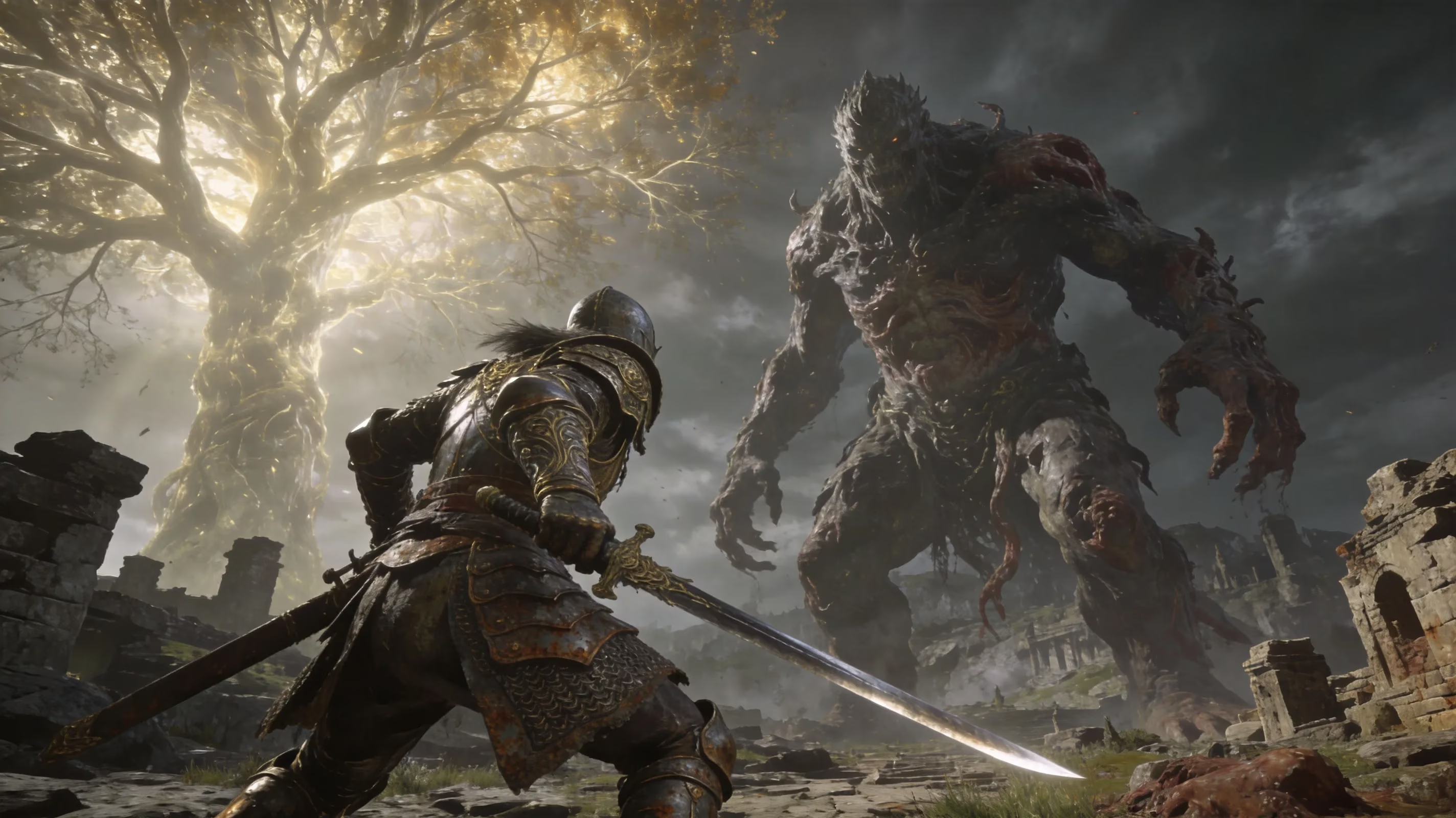
What makes Unsheathe so strong is the timing window. You can catch enemies during the recovery of their own attacks pretty consistently, especially once you get used to boss rhythm. The trick is to wait for clear openings rather than panic-casting it the second you see movement.
Bleed is the other major reason katanas are so dominant. Each hit adds to the target's hemorrhage meter, and once that threshold is met, the proc chunks a percentage of max HP in one burst. Against bosses with huge health pools, that is basically free value, and it's why even simple katana setups stay relevant all the way into late game and DLC.
Spacing matters more than a lot of players expect. Katanas are fast, but they are not mindless face-tank weapons. You usually want to sit at that middle distance where the blade connects cleanly while keeping yourself just outside the enemy's easiest counter-hit range.
Best Katana Builds in Elden Ring
There are three main katana build paths worth focusing on, and each one plays a little differently even if the core weapon class stays the same.
Dex Bleed is still the easiest and most reliable place to start. A strong target spread is 60 Vigor, 25 Endurance, 80 Dexterity, and 25 Arcane, though dropping Arcane to 20 is perfectly fine if you want more stamina and equip load. Hitting 60 Vigor matters a lot in PvE because late-game and DLC bosses punish low health bars brutally, and this setup keeps your damage simple: fast attacks, repeated bleed procs, and flexible affinity choices through Blood or Keen.
Int/Moonveil shifts the build toward Intelligence while still keeping Dexterity relevant. A practical spread looks like 60 Vigor, 15 Endurance, 40 Dexterity, and 60 Intelligence. The reason players keep coming back to this setup is simple: Transient Moonlight is absurdly efficient, giving you a fast magic slash that hits hard and breaks stance quickly, though you do need to pay attention to magic-resistant bosses before committing too hard to it.
Arcane Status builds are all about pushing bleed and status pressure as far as possible. The usual spread lands around 60 Vigor, 20 Endurance, 30 Dexterity, and 60 Arcane. Occult affinity lets Arcane function as a real damage stat on compatible weapons, while Blood affinity pushes hemorrhage buildup even harder; if you're dual wielding, bumping Endurance into the 25–30 range is honestly worth it because powerstance strings chew through stamina fast.
Best Katanas for Each Build
Picking the right katana matters just as much as your stat spread. Some are flexible all-rounders, while others are basically built for one specific archetype.
| Katana | Best Affinity | Primary Build | Notable Trait |
|---|---|---|---|
| Uchigatana | Blood / Keen | Dex Bleed starter | Innate bleed, Unsheathe default |
| Nagakiba | Blood / Keen | Reach-focused Dex | Longest katana range in class |
| Moonveil | Unique (Somber) | Int/Dex hybrid | Transient Moonlight magic slash |
| Rivers of Blood | Unique (Somber) | Arcane Bleed | Corpse Piler blood-slash art |
| Hand of Malenia | Unique (Somber) | Pure Dex | Waterfowl Dance mimic art |
The Uchigatana is the natural starting point for most players. Samurai begins with it, and everyone else can grab it from Deathtouched Catacombs in Limgrave. Because it already has innate bleed, accepts multiple affinities, and comes with Unsheathe by default, it stays useful far longer than a lot of “starter” weapons in this game, especially once you push it to +25.
The Nagakiba comes from Bloody Finger Hunter Yura's questline in Limgrave, or much earlier if you decide to kill him near Murkwater Cave. Its biggest advantage is obvious the moment you swing it: the range is ridiculous for a katana. Running attacks, crouch pokes, and jump attacks all start connecting from distances that make spacing much easier, and in PvP that extra reach is a serious roll-catch tool.
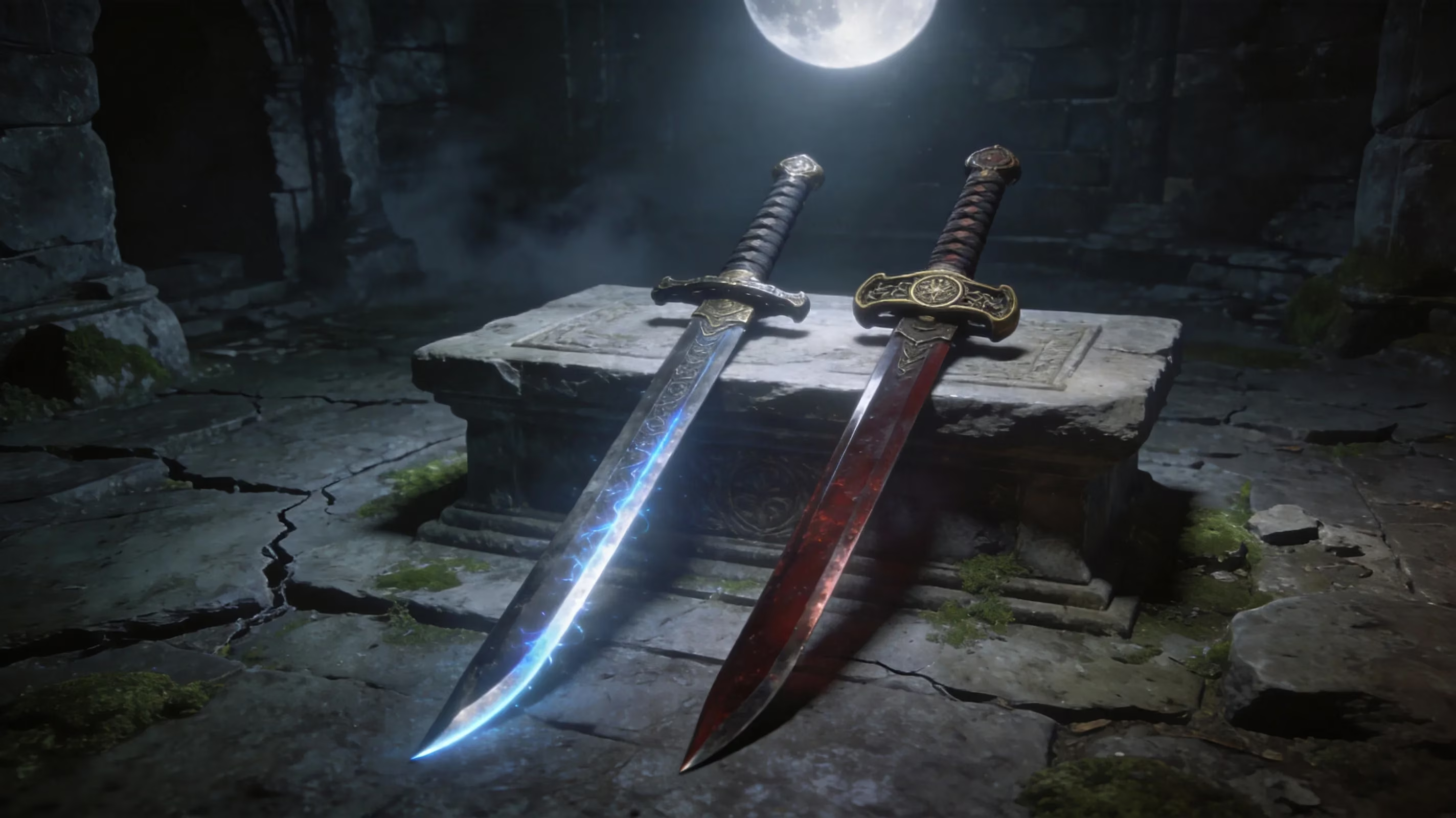
Moonveil drops from the Magma Wyrm in Gael Tunnel and upgrades with Somber Smithing Stones. Even after multiple balance passes, Transient Moonlight is still one of the cleanest boss-killing weapon arts in the game because it doubles as ranged pressure and stance damage. Rivers of Blood, found from an invading NPC near the Church of Repose in the Mountaintops of the Giants, scales with Arcane and brings Corpse Piler — a rapid blood-flurry skill that can trigger hemorrhage almost instantly on many enemies.
Katana Ashes of War and Talismans
The right Ash of War setup can turn a good katana into a monster. For regular katanas, Unsheathe remains the standard for a reason. You can buy it from Knight Bernahl at Volcano Manor, and on Keen builds it is still one of the best options in the game because the heavy version does enough stance damage to stagger many bosses in just two clean connections.
Double Slash is another strong choice, especially if you're leaning into dual-katana pressure and want a more aggressive, combo-oriented rhythm. It works especially well on Dex Bleed setups where repeated hits matter more than single heavy punish windows. Then there is Seppuku, which is basically the premium pick for Arcane-focused builds: you stab yourself, buff the weapon with extra blood buildup, and keep that bonus for roughly 60 seconds. The health trade is minor compared to the damage payoff, particularly in difficult boss fights.
Affinity choice changes the whole feel of the weapon. Keen is ideal when you want to maximize Dexterity scaling on regular katanas like the Uchigatana or Nagakiba, and at +25 it reaches excellent scaling. Blood lowers the base damage a bit but massively improves hemorrhage buildup, which is great for Arcane setups or any build that wants faster procs. Cold is less common, but it is absolutely worth mentioning because stacking Frostbite on top of innate bleed gives you two separate percentage-based bursts, and bosses really feel that.
For talismans, Rotten Winged Sword Insignia is one of the strongest picks available to katana users. It boosts attack power by up to 18% through consecutive hits, and katana strings stack it very quickly without needing awkward setup. Shard of Alexander is just as important for skill-focused builds, adding 15% more damage to weapon skills like Unsheathe, Transient Moonlight, and Corpse Piler. Put those two together and you have the offensive backbone of most top-tier katana loadouts.
Katana Combat Rotations and Boss Pressure
Good katana play is not just about having bleed on the weapon. It is about using the right sequence at the right time so you get damage, status buildup, and stagger pressure without draining all your stamina at once.
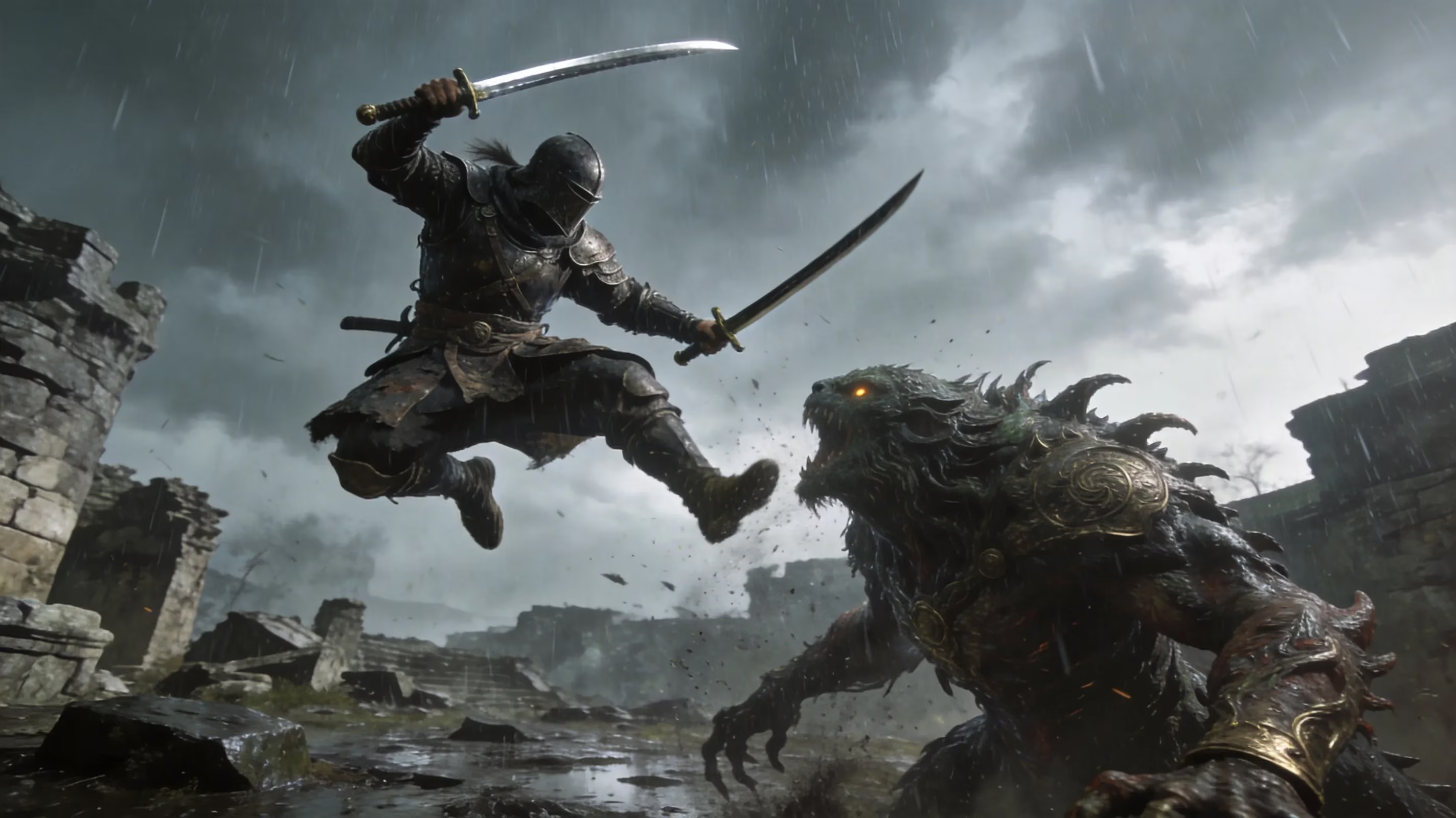
For dual-katana builds, the standard opener is a jump L1. That attack hits with both weapons on the way down, deals heavy poise damage, and stacks a lot of bleed immediately. It also starts building momentum for Rotten Winged Sword Insignia, so following it with two or three more L1 attacks often pushes you straight into a hemorrhage proc before the enemy can reset the exchange.
Against human-sized enemies, roll-catching is one of the most useful skills you can learn. If your first light attack gets dodged, many enemies try to use that small recovery window to reposition or counter. Delaying a running R1 by just a fraction of a second often catches the end of their roll cleanly because the lunge carries farther than they expect.
The other pressure tool worth mastering is the crouch poke. Hold crouch, tap R1, and you get a quick low thrust that comes out fast and is surprisingly awkward for enemies to read. In longer fights or PvP-style exchanges, that little poke does a lot of work because it interrupts neutral spacing without needing a full commitment.
For boss stance breaks, a strong route is Unsheathe heavy into two charged R2s, then repeating the cycle when stamina allows. On most field bosses, two full rotations of that is enough to crack stance, and lighter minibosses can fold even faster. Once the stagger happens, the critical hit gives you the biggest single burst window most katana builds can access.
Boss pressure is really about reading phases correctly. On aggressive bosses with long combo strings, your safest bleed window usually comes right after the finisher, and Unsheathe light is a great way to slip damage in without overextending. On slower bosses that stagger more easily, plain light-attack chains are often the better call because they keep your stamina healthier than repeated Ash of War spam.
Katana Locations, Upgrades, and FAQ
If you're starting a fresh run, you can get a strong katana setup going very early. Samurai starts with the Uchigatana, which is the easiest route by far. If you picked another class, you can still grab the weapon in Deathtouched Catacombs in northern Stormhill, where it sits on a body near the boss fog gate.
The Nagakiba is also available early if you know where to look. Yura can be found under the bridge near Murkwater Cave in Limgrave, and if you are willing to give up his quest rewards, fighting him right away gives you access to that massive range much earlier than normal. For some players, especially those who want immediate PvP pressure, that trade is worth it.
Regular katanas such as the Uchigatana and Nagakiba use standard Smithing Stones and upgrade to +25. Somber weapons like Moonveil, Rivers of Blood, and Hand of Malenia instead use Somber Smithing Stones and cap at +10. The important thing here is flexibility: Somber katanas are locked to their built-in weapon skills, while regular katanas can freely swap Ashes of War, which is a huge reason they stay relevant even when unique weapons have higher peak power.
Setting up dual-wield powerstance is simple. Equip any two katanas, one in each hand, and the left-hand attack input will automatically use the dual attack moveset. They do not need to be the same weapon, but you do need to meet each weapon's stat requirements properly, otherwise your damage gets hit hard and the setup falls apart.
FAQ — Best Katana Choices
Which katana is best for a first playthrough? The Uchigatana is still the safest answer. It handles the base game and DLC extremely well, and because it works with multiple Ashes of War and affinities, it stays useful from Limgrave all the way into the Shadow Realm.
Is Rivers of Blood still strong in 2026? Yes, definitely. Corpse Piler is still one of the fastest bleed-proc tools in the game, and Arcane scaling helps it stay competitive even when a boss resists hemorrhage, especially if your build has another source of damage to back it up.
Can katanas handle the Shadow of the Erdtree DLC bosses? Absolutely. DLC Remembrance bosses have large HP pools, which makes percentage-based bleed damage especially valuable. Moonveil and Rivers of Blood, in particular, remain a brutal pairing when the build is put together correctly.
Conclusion
Learning how to use katanas in Elden Ring really comes down to pairing the right weapon with the right build, then executing the fundamentals well: spacing, stance damage, and steady bleed uptime. Dex Bleed is the most straightforward path if you want strong results without a lot of setup, Int/Moonveil is perfect for players who like a hybrid spellsword style, and Arcane Status offers the nastiest single-target burst in the class. No matter which route you take, the progression feels smooth — Uchigatana carries early and mid game, Nagakiba adds incredible reach, and Moonveil or Rivers of Blood step in as major upgrades once your stats are ready. If you get comfortable with jump L1 openers, keep hemorrhage cycling, and save Unsheathe for real boss windows, katanas stay top-tier across basically every part of the game.