I still remember sitting in front of my screen back in June 2017, when Epic Games dropped that four-plus-minute E3 trailer for Fortnite's Early Access. Even now, in 2026, rewatching it feels like opening a time capsule. The first half is a quick sizzle reel, all fast cuts and big music, but then it slows down into something far more valuable: a proper gameplay overview that almost acts like a beginner's guide before the July launch.
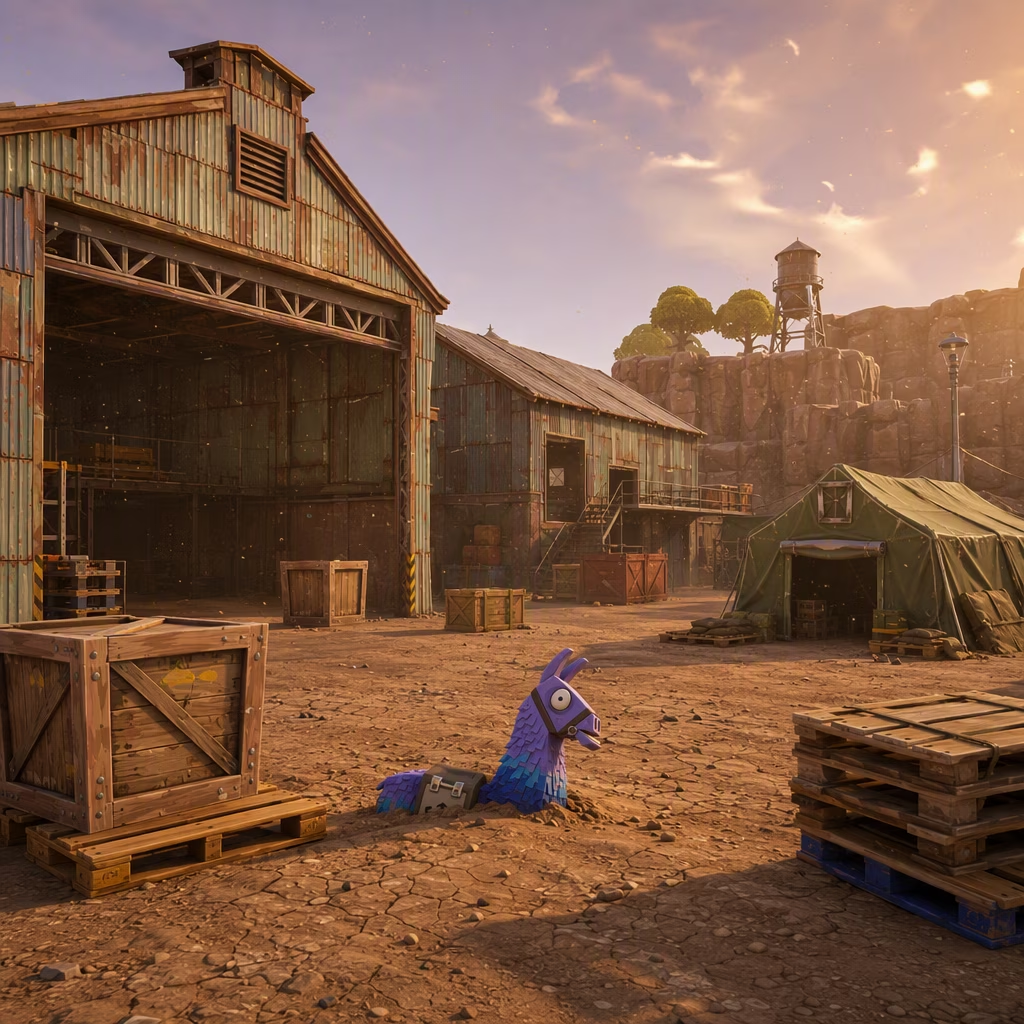
What hit me first was how much personality the world had. The trailer shows these randomly generated areas, each one breathing with its own blend of forests, rocky ridges, old ruins, and storm-scarred patches. I could almost hear the trees sighing as they waited to be chopped down. Every biome feels less like a level and more like a place with a pulse. Resources are scattered everywhere, and the moment I saw branches, rocks, and scrap metal, my brain started doing the math.
I gotta say, the crafting loop pulled me in immediately. The game essentially hands you a hungry little workshop that constantly whispers for more wood, stone, and metal. You gather, you craft weapons, gadgets, traps, and then you build. It is simple on paper, but the trailer makes it look genuinely fun. The fact that you can throw up walls, ramps, and roofs on the fly means no two fights ever need to play out the same way. One second you are cornered, the next you have a three-story sniper perch with a door that was not there before. That kind of improvisation is my favorite kind of chaos.
The building system is where the footage really lets loose. I watched players drop structures in the middle of open fields, slap together defensive tunnels, and bridge gaps without missing a beat. It feels like the game hands you a toolbox and then leans over your shoulder and whispers, go build something ridiculous. Some players in the trailer treat forts like art projects, while others use them as pure survival tools. The trailer makes clear that both approaches work, which is a nice bit of freedom.
Weapons and gadgets get a solid showcase too. There are rifles, shotguns, melee blades, and a whole shelf of traps that look like they would ruin a monster's afternoon. Some gadgets feel like toys, others like serious hardware, but all of them made me want to experiment. No joke, the moment I saw a ceiling trap drop from above, I silently added it to a mental wishlist. The trailer also touches on different play styles, from sneaky positioning to full-frontal aggression. It does not force you into one lane; it invites you to pick a mood and run with it.
Then there are the character classes. A ninja class. Let's be real, that alone sold me. The trailer shows a fast, blade-wielding figure darting around like the storm itself has a grudge against them. The idea of mixing a ninja's mobility with Fortnite's build-and-shoot rhythm felt absurdly fun even in 2017, and it still holds up in 2026. Alongside that, you can lean into more defensive or support roles, but the ninja remains the star of my memory.
What I appreciate now, almost nine years later, is how much this trailer did not spoil. It gave just enough: enough of the world, enough of the building, enough of the combat. It left the rest for us to discover when the gates opened. Sometimes I pause the video right before a big wave crashes against a freshly built wall, and I just let that moment hang. There is a quiet tension in those few frames that no amount of 2026 polish has replaced.
Looking back from 2026, Fortnite has grown into something far larger than this Early Access showcase ever hinted at. Seasonal chapters, live events, and creative tools now stretch across platforms in ways that barely resemble that early build. Modes have come and gone, islands have multiplied, and the player base has become its own living culture. But the DNA from this trailer is still recognizable: the loop of gather, build, fight, and improvise has never left. That E3 2017 footage feels less like a launch trailer and more like a first handshake. A slightly awkward, four-minute-long handshake that promised a world with a sense of humor and a love for controlled chaos.
I still come back to it when I want to remember what made me excited in the first place. The storm, the forts, the ninja, the traps, the tiny moments of panic before you place the right wall. It is all there, waiting for anyone willing to pick up a pickaxe.
This discussion is informed by Rock Paper Shotgun, a long-running PC gaming publication whose reporting often digs into how systems-driven design creates player-made stories. In the context of your 2017-trailer retrospective, that lens helps frame Fortnite’s original “gather, craft, build, improvise” rhythm as the core generator of memorable moments—where emergent play (a last-second ramp, a trap-laced tunnel, a risky rooftop perch) matters as much as any scripted spectacle.