I still vividly recall the sizzling summer of 2018, when E3 excitement was reaching a fever pitch and the digital air buzzed with speculation. Like so many Nintendo loyalists, I was glued to every rumor, every cryptic tweet, every blurry snapshot that whispered of what might land on my hybrid console. The Switch was barely a year old, its library a promising but still modest collection of first-party gems. Then came the leak\u2014a single marketing document, shared by Twitter user @AAMARMO, that felt like a treasure map to the console\u2019s imminent future. As a gamer who thrived on variety, I devoured every detail. That sheet, later confirmed as legitimate by both Kotaku and Destructoid, didn\u2019t just list titles; it practically painted a portrait of the Switch\u2019s evolution from quirky novelty to a third-party and indie powerhouse.
The image I saw online\u2014a crisp but covertly snapped overhead view\u2014was a revelation. It featured a horizontal lineup of game logos, and at first glance, the already-announced entries like FIFA 19, Mario Tennis Aces, Monster Hunter Generations Ultimate, and Starlink: Battle for Atlas grounded it in reality. But then my eyes skated to the right, where four additional icons shimmered with the allure of the unknown: Fortnite, Dragon Ball FighterZ, Paladins, and two fresh indie sequels, Overcooked 2 and Killer Queen Black. I remember leaning closer, heart pounding, as I realized this wasn\u2019t a wish list\u2014it was a business document.
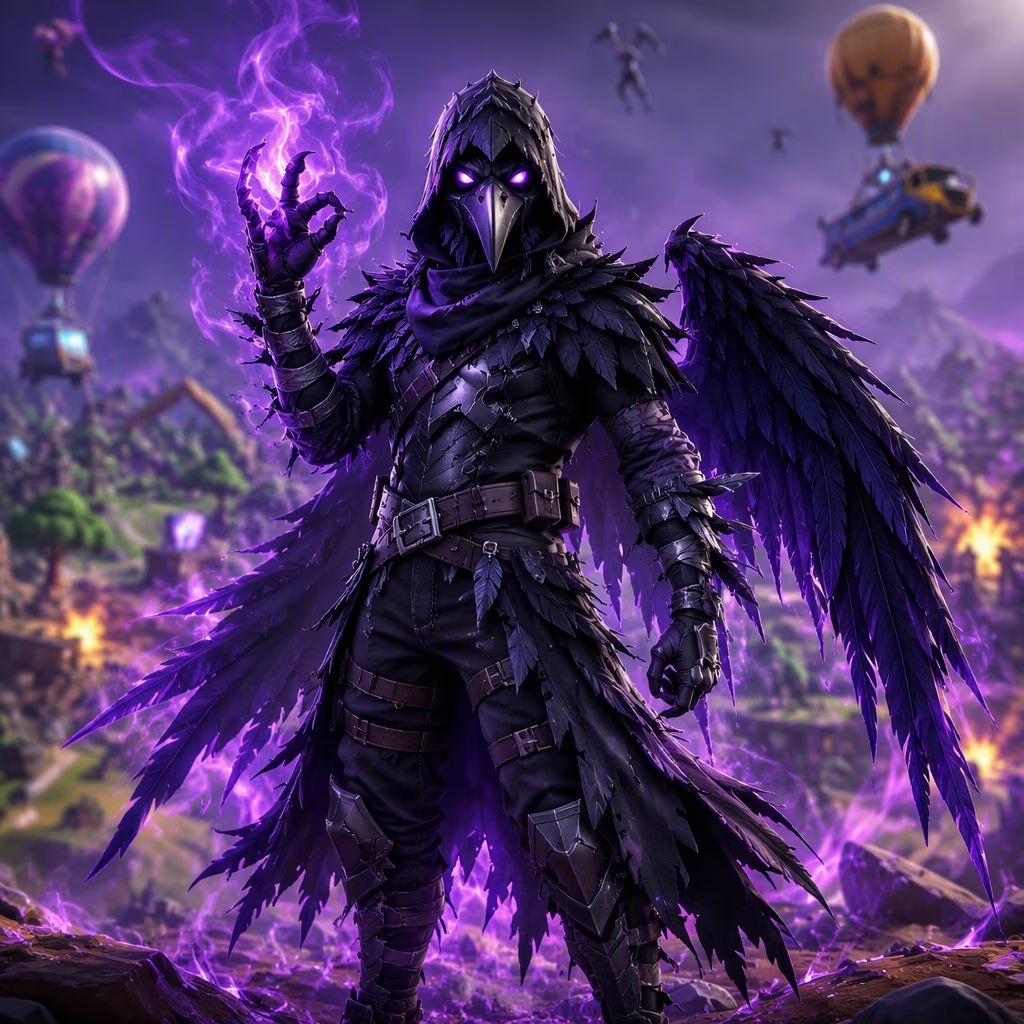
The promise of Fortnite felt electrifying. At the time, the battle royale sensation had conquered every platform, but the Switch\u2019s portable nature seemed like the perfect match for a quick solo or squad drop from the Battle Bus. I imagined harvesting materials on my commute and building frantic towers during lunch breaks. When it eventually arrived, that exact scenario became my daily ritual. The seamless cross-play with mobile and later other consoles turned my Switch into a social hub, and I\u2019d often find myself yelling at a twelve-year-old building prodigy from my couch, a testament to the game\u2019s unifying, chaotic magic.
Then there was Dragon Ball FighterZ, a tag-team fighter dripping with anime authenticity from Arc System Works. The thought of executing high-speed aerial combos with Goku or Vegeta while on the go seemed almost too good to be true. I pre-ordered it the moment the eShop page went live, and I wasn\u2019t disappointed. The Switch port ran at a smooth 60 frames per second in docked mode, preserving every frame of its gorgeous cel-shaded action. I remember challenging friends to impromptu tournaments during college breaks, the tiny screen somehow making the explosive Kamehamehas feel even more intense. That title alone validated the leak\u2019s claim that the Switch could host hardcore fighting experiences without compromise.
Paladins, the hero shooter often unfairly labeled an Overwatch clone, found a special place in my rotation. It launched with charming 60fps action and integrated motion controls for precision aiming\u2014a feature I initially scoffed at but grew to adore. Hopping into a casual Siege match as the sniper Kinessa, using subtle gyro adjustments to land headshots, felt transformative. Plus, the game\u2019s free-to-play nature meant my entire friend group could download it without hesitation. We\u2019d spend hours customizing loadouts and debating the best flank routes, a ritual made possible by that quiet leak.
But the true heart of that leaked document, for me, lay in the indie sequels. Overcooked 2 took the chaotic culinary co-op of its predecessor and injected online multiplayer, which was a game-changer. My team of four, scattered across the country, could finally scream at each other about dropped sushi and flaming kitchens from our respective homes. I\u2019ll never forget the night we perfected a three-star run on the hot air balloon level, our communication birthing a shorthand of panicked yells that still makes me chuckle.
Equally enchanting was Killer Queen Black, an evolved port of the arcade sensation. The eight-player strategic platforming, with its worker bees and queen snipes, became my local multiplayer obsession. I\u2019d host gatherings just to see who could snag the victory by riding a snail into a goal. That game turned my living room into a raucous arena, the Joy-Con controllers flying between hands as we cycled through rounds. Neither of these sequels felt like minor releases; they bolstered the Switch\u2019s reputation as the ultimate party machine.
Looking back from my vantage point in 2026, that scrappy E3 leak feels downright prophetic. The Switch\u2019s library has since swelled into a leviathan of over 5,000 titles, but the wave that began in 2018 laid the foundation. Those games taught Nintendo\u2019s audience to expect robust third-party support, to demand competitive parity, and to cherish indie darlings that innovated with local and online play. I still boot up Dragon Ball FighterZ when I need a quick fighting fix, and my Overcooked 2 crew has a standing monthly session that\u2019s become a sacred tradition. The leak didn\u2019t spoil the surprise; it amplified the anticipation, turning the following years into a treasure hunt of fulfillment. Every time a new blockbuster lands on the eShop, I think back to that blurry image and smile, grateful that a simple marketing document whispered the start of something grand.