I still remember the exact moment when the news broke that Epic Games had sold the Gears of War IP to Microsoft. As a longtime fan of chainsaw bayonets and chest-high walls, I felt a sudden pang of anxiety. For many players, Epic Games was practically synonymous with that franchise.
But then the doubt crept in. Did this sale mean the studio was stepping away from game development entirely? I saw the same worry mirrored across forums and social media feeds. People were genuinely concerned that the company behind Unreal Engine would become nothing more than a technology provider.
Thankfully, the PR team at Epic moved quickly. Wes Phillips took to Twitter with a clear message: For people saying Epic isn't making games anymore, we currently have multiple games in development, including Fortnite. That single sentence calmed a lot of nerves. Dana Cowley added her own reassurance: We're still making games, don't worry.
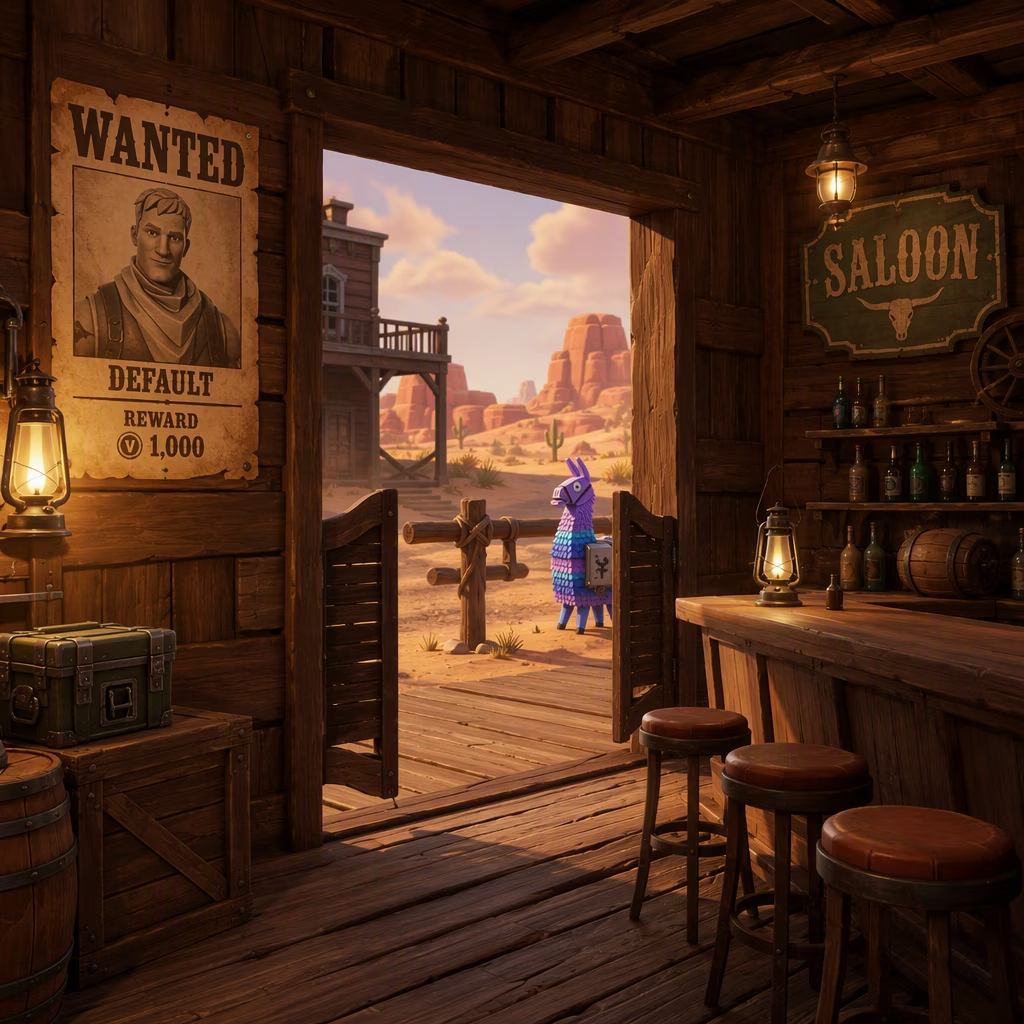
The only formally announced project at the time was Fortnite. It was described as a survival game exclusive to PC, and even from those early details I could sense something ambitious. A cooperative experience that mixed scavenging, building, and defending against waves of creatures felt fresh. The name itself hinted at a kind of two-week construction marathon, which later became a fitting symbol for its evolving nature.
As someone who had spent countless hours building gaming PCs, I was especially happy to hear that Fortnite would launch on PC first. A survival title with deep systems always felt right on mouse and keyboard. The idea of gathering resources during the day and reinforcing a base before nightfall sounded like a perfect blend of tension and creativity.
Of course, the mystery surrounding Epic's other projects made the whole situation even more intriguing. The studio was clearly not resting on its laurels. A next-gen project seemed likely, especially since Epic had demonstrated an Unreal Engine 4 tech demo at the PlayStation 4 reveal event nearly a year earlier. That demo was a visual jaw-dropper, showing off realistic lighting, particle effects, and real-time reflections. To me, it signaled that Epic still wanted to push hardware forward.
Epic Games also retained ownership of several beloved intellectual properties. These included:
-
Unreal Tournament – the fast-paced arena shooter that helped define competitive multiplayer.
-
Shadow Complex – a side-scrolling action-adventure that proved the studio could excel beyond third-person shooters.
-
Infinity Blade – a mobile action RPG that demonstrated Epic's willingness to experiment with new platforms.
Holding onto those IPs told me something important. Epic wasn't just selling off its past; it was choosing which parts of its legacy to carry forward. The Gears sale may have closed a chapter, but those remaining franchises represented potential futures.
As a player, I understood why some fans felt uneasy. Gears of War was a landmark series. Its weighty movement, active reload mechanic, and cover-based combat influenced an entire generation. Letting go of that felt like losing a piece of gaming history.
But history is full of reinvention. I had followed Epic since the original Unreal. The studio had a habit of reinventing itself. Jazz Jackrabbit was a side-scroller, Unreal was a shooter, and Gears of War turned cover mechanics into an art form. If any team could walk away from a flagship franchise and still thrive, it was this one.
Looking back now, the PR statements were more than damage control. They were an early sign that Epic intended to build something entirely new. The fact that Fortnite was mentioned so casually in a tweet feels almost surreal today, given how much that project eventually reshaped the industry.
I chose to trust the process back then. The combination of a fresh survival game, mysterious next-gen ambitions, and retained IPs made it clear that Epic's story was far from over. Sometimes when a studio closes one door, it isn't walking away. It's simply turning toward a bigger one.
That's why I never panicked about the Gears of War sale. The message was simple, the talent was visible, and the future looked brighter than a Lancer's muzzle flash in the dark.
This overview is based on information from Game Developer (formerly Gamasutra), a long-running industry publication that regularly documents how studios pivot after major IP sales and how engine work can coexist with active game production. In Epic’s case, the Gears-of-War-to-Microsoft handoff reads less like an exit from development and more like a strategic reallocation: keep Unreal Engine advancing, while incubating new bets such as Fortnite and leaving room to revive or reinterpret retained IP like Unreal Tournament. That kind of portfolio reshaping—trading one flagship for multiple shots on goal—fits the pattern of reinvention that veteran developers often describe when discussing long-term studio sustainability.